Sending the same email to your entire list is costing you opens, clicks, and customers. Canadian businesses that segment their email lists see significantly higher engagement — and that gap only grows as your list does. The math is straightforward: a message written for one audience almost always outperforms a message written for everyone.
For Canadian marketers, segmentation carries a second layer of importance beyond performance. CASL already requires you to treat subscribers differently based on when and how they gave consent. The two consent types — express and implied — have different rules, different expiry windows, and different legal obligations. That means segmentation isn’t optional for compliance either.
This guide covers how to build a practical segmentation strategy: starting with the consent segments CASL requires, then layering in behavioral and demographic data. INBOX has the tools to automate most of this once your rules are in place. If you’re just getting started with email marketing, the email marketing overview is a useful foundation before diving in here.
1. Why Segmentation Outperforms Broadcast Campaigns
A broadcast email treats a first-time subscriber and a three-year customer identically. It sends a spring promotion to someone who bought that product in January. It pitches a service to someone who already uses it. None of this is deliberate — it’s just what happens when there are no segments.
What you actually gain
- Higher relevance: Subscribers receive content that fits where they are in their relationship with your brand, not where you assume they are. Relevance is the single best predictor of open rate.
- Better deliverability: Consistently low engagement signals to ISPs that your emails aren’t welcome. Segmenting out inactive subscribers before a major send protects your sender reputation — see INBOX’s guide to improving email deliverability for more on this.
- Fewer unsubscribes: People leave lists when the content feels irrelevant. Match the message to the segment and most of them stay. The reasons campaigns get cancelled often trace back to audience mismatch.
- Cleaner compliance records: When a CRTC audit asks how you obtained consent for a specific subscriber, your segment data and tags are part of the documentation trail.
Segmentation isn’t about sending fewer emails. It’s about sending emails that feel like they were written for one person, even when you’re reaching a thousand.
The goal is precision, not volume reduction. High-frequency sending to well-matched segments performs consistently better than low-frequency broadcast sends to a cold, undifferentiated list.
2. Start with CASL — Your Legally Required First Segment
Before you build behavioral or demographic filters, you need a consent segment. CASL divides your list into categories with different legal obligations attached — and you need to know which subscriber falls into which category before sending anything commercial.
The three consent tiers
- Express consent: The subscriber actively opted in — through a signup form, a checkout checkbox, or a documented verbal agreement. Express consent doesn’t expire under CASL. This is your most durable, legally clean segment.
- Implied consent: The subscriber has a recent business relationship with you (within the last 2 years) or made a recent inquiry (within 6 months). Implied consent expires on a hard deadline. Before it lapses, you need either an express opt-in or you stop sending. Tag these contacts with their consent date so you can act before the window closes.
- Suppressed: Subscribers who have unsubscribed, bounced permanently, or whose implied consent has expired. This segment should never receive commercial messages. INBOX’s CASL compliance tools handle suppression automatically — but knowing who’s in this group matters for your own records.
For the detailed breakdown of expiry timelines, mandatory message elements, and what counts as a business relationship under CASL, the 2026 CASL compliance checklist covers it systematically. Run this consent audit before you build anything else — it’s the foundation everything else sits on.
3. Behavioral Segmentation — Let Engagement Tell You Who’s Listening
Once consent segments are clean, layer in engagement data. Behavioral segmentation is based on what subscribers actually do — opens, clicks, purchases — rather than what they said about themselves at signup. It’s more accurate, and it updates continuously as behavior changes.
The three engagement tiers
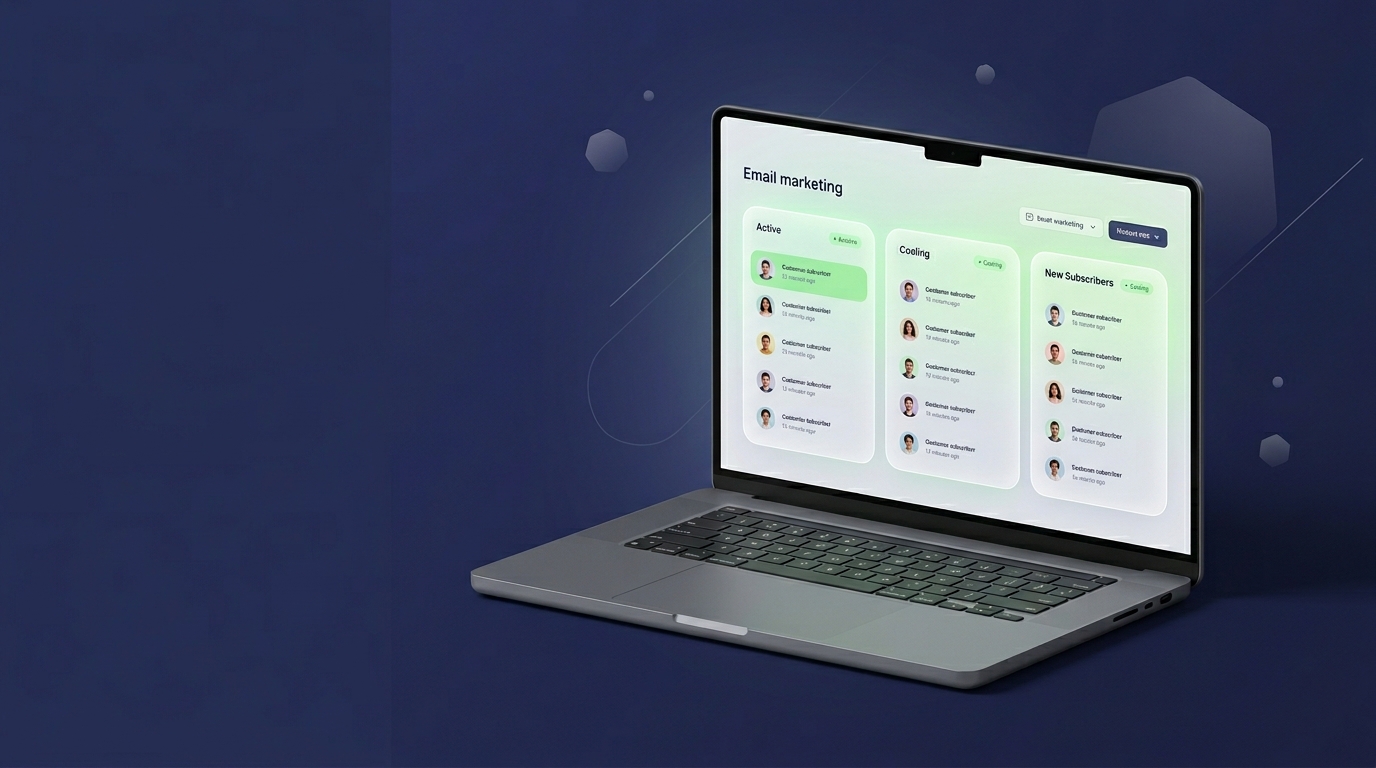
- Active (opened or clicked within 90 days): Your highest-value segment. Send your full campaign schedule here. These subscribers are paying attention — give them your best content and don’t hold back on frequency if the content warrants it.
- Cooling (91–180 days since last engagement): Still on the list, but losing interest. Send a re-engagement sequence before they slide further — a compelling subject line, a clear value reminder, and a direct question about whether they want to stay. Most will either re-engage or self-select out, which is fine.
- Inactive (no opens or clicks in 180+ days): Stop sending standard campaigns to this group. Run a deliberate win-back sequence — two or three emails maximum — then suppress anyone who doesn’t respond. Continuing to send to inactive addresses actively damages your deliverability with Canadian ISPs.
Inactive subscribers don’t just ignore your emails — they teach inbox filters that your emails aren’t worth showing to anyone. Suppressing them is an act of self-preservation, not surrender.
INBOX’s personalization and segmentation platform lets you create dynamic engagement segments that update automatically as subscriber behavior changes. Set the rules once, and the segments maintain themselves.
4. Demographic and Preference Segmentation
The third layer is what subscribers tell you about themselves — either directly through a preference centre or indirectly through their purchase and browsing history. This is where segmentation moves from sorted to genuinely personal.
Data worth segmenting on for Canadian businesses
- Province or region: Different provinces have different economic patterns, seasonal timing, and sometimes different regulatory contexts. A promotion timed for a long weekend hits differently in Ontario versus Alberta — those holidays aren’t always the same day.
- Language preference: If you serve both English and French-speaking markets, this is one of the first segments to create. Bilingual sends to a unified list are a reasonable workaround, but separate segments with tailored copy perform better and signal more respect for the reader.
- Industry or business type: If your product serves multiple verticals — say, both retail and professional services — those audiences have different pain points and different vocabularies. A single campaign rarely speaks well to both at once.
- Purchase history: Segment by product category, recency, and value. A high-value customer who bought recently is a different prospect for upsell than a one-time buyer from 18 months ago. Treat them differently.
- Self-declared preferences: Give subscribers a preference centre — either at signup or during re-engagement — where they can choose content topics and send frequency. Subscribers who set their own preferences churn at significantly lower rates than those who didn’t get to choose.
You don’t need all five of these on day one. Start with the two data points you already have and build from there. The small business email marketing guide covers how to structure this as your list and your data both grow.
5. Building Your First Segmentation System in INBOX
Getting from theory to a working system doesn’t require a data team or weeks of setup. Here’s how to build functional segmentation inside INBOX in a focused afternoon.
A practical setup sequence
- Step 1 — Audit your current list: Export your subscriber data and identify what fields you actually have: email, name, signup date, consent type, last purchase date, last open. This tells you what segments are possible right now, not what you wish you had.
- Step 2 — Build your consent segments first: Tag every subscriber as express or implied, and flag the expiry date for implied contacts. Add these to your calendar as reminders. This is non-negotiable before any campaign send.
- Step 3 — Set up engagement tiers: Use INBOX’s filtering to create active, cooling, and inactive segments based on open and click activity. Set a monthly recurring task to review and move subscribers between tiers as behavior changes.
- Step 4 — Add one demographic layer: Pick the single demographic variable that matters most to your business — usually location or industry — and create segments for it. Resist the urge to build five segments simultaneously. One done well beats five half-finished.
- Step 5 — Test before rebuilding everything: Run your next campaign to one clean segment and measure it against your previous broadcast average. Once you see the difference in open and click rates, you’ll have the evidence you need to build the rest of the system.
INBOX’s advanced features include dynamic segmentation that re-sorts subscribers automatically as their behavior updates. Once your segment rules are configured, the platform handles the ongoing maintenance. You can also review the automation tools guide to see how segmentation connects to your email workflows.
Ready to Send Smarter, More Targeted Campaigns?
INBOX makes segmentation straightforward for Canadian businesses — from consent tracking that keeps you CASL-compliant to dynamic engagement filters that maintain themselves. No developer required.
Start Free with INBOX