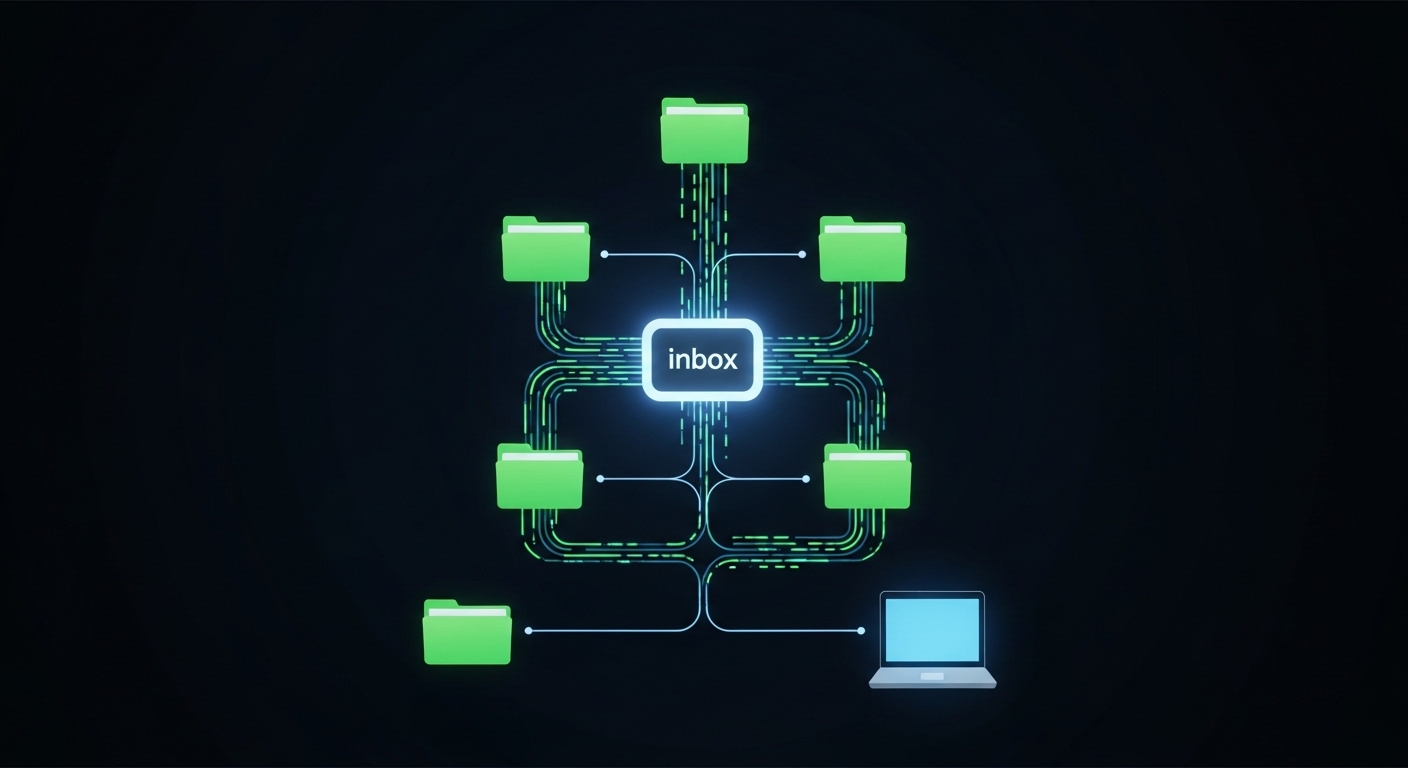
Email clients and servers communicate using specific protocols that determine how messages are stored, synchronized, and accessed. Most of the time, setting up a new email account on your smartphone or computer is as simple as typing in your email address and password. Modern auto-discovery protocols handle the heavy lifting behind the scenes. But occasionally, you might find yourself digging into advanced settings to fix a messy folder structure or a persistent syncing error. That’s where the “IMAP Path Prefix” comes in—a technical setting that can cause massive headaches if misconfigured, yet its purpose is rarely explained clearly to the average user.
Whether you are setting up standard email marketing accounts, managing a complex corporate inbox, or simply trying to get Apple Mail to play nicely with your custom domain, understanding how your folders sync is paramount. In this comprehensive guide, we will explain exactly what an IMAP path prefix is, why it exists from a technical standpoint, how it influences your folder structure, when you need to manage it, and how to configure it correctly by following our step-by-step instructions.
By the end of this guide, you will understand why this seemingly obscure configuration detail can dramatically affect how your email folders appear, perform, and sync across your daily devices. Let’s dive into the architecture of your inbox.
Understanding IMAP and Folder Architecture
To understand the path prefix, you first need a solid grasp of how IMAP (Internet Message Access Protocol) handles folders compared to older protocols like POP3. IMAP is an advanced email protocol that allows users to access and manage emails directly on the mail server instead of downloading them permanently to a single local device. This ensures your inbox, folders, and message statuses (like read/unread) stay perfectly synchronized whether you are checking mail on your phone, a web browser, or a desktop client.
How IMAP Organizes Folders on the Server
Unlike a simple, flat list of messages, an IMAP server acts very much like the file system on your computer’s hard drive. Understanding this structure is critical for businesses using advanced automation or relying on third-party integrations that parse incoming mail.
- Hierarchical Directories: Folders exist as distinct directories or “nodes” on the mail server.
- Nesting Capabilities: Folders can contain individual email messages, but they can also contain other folders (known as subfolders).
- Namespaces: The server uses a concept called Namespaces (defined strictly in IMAP RFC 2342) to separate different types of folders. For example, it separates your personal folders from folders shared by other users on the same network, and from public administrative folders.
When you connect an email client to a server, the client asks the server for a list of all available folders. The server responds with its namespace architecture. If the client and server misinterpret this architecture, chaos ensues in your folder tree.
What Is an IMAP Path Prefix?
The IMAP Path Prefix (sometimes referred to in email clients as the “Root Folder Path”) is a specific configuration setting in your email client that tells the client exactly where on the server it should look to find your primary mail folders, such as your Inbox, Sent Items, Drafts, Spam, and Trash.
Think of a traditional corporate filing cabinet. Imagine your company has a massive, multi-room filing system. However, all of your specific personal files and folders are located inside a single master drawer labeled “Employee A.” If you needed an assistant to find your “Sent Memos” folder, you wouldn’t tell them to just “look in the filing system.” They would get lost among administrative files and other employees’ documents. You would tell them to “look inside the drawer labeled Employee A, and then find Sent Memos.”
The IMAP path prefix is that specific master drawer. It defines the “root directory” for your personal mail namespace. By defining the prefix, you map the client’s expectations to the server’s reality.
Depending on the software running on the backend mail server (such as Courier IMAP, Dovecot, or Microsoft Exchange), the server might store your folders in fundamentally different ways. The two most common structures are:
- No Prefix (Blank): All default folders (Inbox, Sent, Trash) sit side-by-side at the absolute top level of the server’s directory. This is the modern standard used by Google Workspace, Microsoft 365, and modern Dovecot servers.
- INBOX Prefix: The server places the
INBOXat the very top level, but forces all other folders (Sent, Drafts, custom user folders) to exist physically inside the INBOX directory as subfolders. This is highly common on legacy UNIX systems, cPanel hosting using Courier IMAP, and some older enterprise setups.
If you are managing outbound campaigns via cold email, ensuring your path prefix is correct is vital, as third-party sender tools need to know exactly where to deposit replies and bounce notifications.
Symptoms of a Misconfigured Path Prefix
Most modern email clients, like Apple Mail, Microsoft Outlook, and Mozilla Thunderbird, attempt to automatically detect the correct path prefix during setup by querying the server’s namespace capabilities. However, auto-discovery doesn’t always work perfectly. Manual configuration becomes strictly necessary when you experience any of the following frustrating scenarios.
1. The “Nested Inbox” Syndrome
This is the most visually obvious indicator of a path prefix issue. You open your email client and see that your Sent, Drafts, Trash, and all custom folders are showing up as subfolders tucked underneath your Inbox. You literally have to click a drop-down arrow next to your Inbox just to see your sent messages. Setting the path prefix to INBOX fixes this by telling the client, “Treat the inside of the INBOX as the top level.”
2. Duplicated Standard Folders
If your client doesn’t know the proper path, it might try to create its own local folders to make up for the standard folders it thinks are missing from the server. You might end up with an INBOX.Sent folder (living on the server) and a separate Sent Messages folder (created locally by Apple Mail). This creates severe clutter and confusion regarding where your outgoing mail is actually being saved.
3. Inability to Save Drafts or Sent Mail
When an email client sends an email, its standard behavior via IMAP is to copy that sent message to the server’s dedicated Sent folder. If the path prefix is wrong, the client cannot find the server’s official Sent folder. You may receive an error stating: “The message could not be saved to the Sent folder.” This can be disastrous for businesses that rely on a reliable SMTP service to log correspondence.
4. Inability to Delete Messages & Compliance Risks
If you try to delete an email and get an error saying the message could not be moved to the Trash folder, a prefix error is likely to blame. The client is looking for a Trash folder at the root level, but the server is hiding the real Trash folder behind an INBOX prefix. If emails are improperly deleted or lost, this could even violate strict data retention policies or GDPR compliance mandates.
5. Sync Delays, Battery Drain, and Timeouts
When an email client is confused about the namespace and directory structure, it may continuously query the server, hopelessly searching for standard folders it expects to exist at the root level. This continuous background polling consumes massive amounts of bandwidth, drains mobile device batteries, and actively hinders instant deliverability by causing the app to freeze or timeout.
Common IMAP Path Prefix Values
Different email clients, server configurations, and hosting providers may require different inputs for this setting. Before you start randomly guessing, it helps to know what the standard values are. Here are the most commonly encountered IMAP path prefix values and exactly what they mean:
| Path Prefix Value | Description | Common Server Types |
|---|---|---|
| (Blank / Empty) | The client looks at the absolute top level of the server directory for all folders. This is the modern standard. | Dovecot, Microsoft Exchange, Google Workspace, Modern cPanel |
| INBOX | Tells the client that all secondary folders (Sent, Trash, Archive) are physically located inside the INBOX directory. | Courier IMAP, legacy cPanel servers, older shared hosting |
| INBOX. | Similar to INBOX, but explicitly includes the server’s hierarchy separator (the period) to denote a sub-directory structure. | Older UNIX-based mail servers (Maildir formats) |
| / | Explicitly tells the client to look at the root of the server. Rarely needed manually, but sometimes used to force a reset on stubborn clients. | Custom Linux mail implementations |
For advanced users building custom applications, interacting with these folder paths programmatically requires a robust backend. You can explore how developers handle routing with our Email API documentation. If you are instead managing high-level campaigns and relying heavily on reporting & analytics, ensuring standard folders like Bounces or Complaints sync correctly is just as crucial.
How to Configure the IMAP Path Prefix
If you are experiencing the symptoms of a misconfigured prefix, you can easily change it in your email client’s settings. The process varies slightly depending on the application you are using. Below are the step-by-step instructions for the most popular email clients. If you run into severe issues, you can always contact us for guidance.
For Apple Mail (Mac Desktop)
Apple Mail is notorious for occasionally struggling with Courier IMAP servers, making this a frequent troubleshooting step for Mac users.
- Open the Mail app and click Mail > Settings (or Preferences on older macOS versions) in the top menu bar.
- Navigate to the Accounts tab and select your email account from the left-hand sidebar.
- Click on the Server Settings tab in the main window.
- Click the Advanced IMAP Settings button.
- Locate the field labeled IMAP Path Prefix.
- Type
INBOX(always use all caps) or leave it completely blank, depending on your server’s requirement. - Click OK, save your settings, and immediately restart the Mail app to force a complete re-sync of your folders.
For Apple Mail (iPhone / iPad iOS)
- Open the native Settings app on your iOS device.
- Scroll down and tap on Mail, then tap on Accounts.
- Select the problematic email account, then tap on the Account name (usually your email address) again to open its specific settings.
- Scroll to the absolute bottom and tap Advanced.
- Under the “Incoming Settings” section, find the IMAP Path Prefix field.
- Enter
INBOX(all caps) or clear the field entirely. - Go back one screen by tapping “Account” in the top left, and then ensure you tap Done in the top right corner to save the changes.
For Microsoft Outlook
- Open Outlook and go to File > Account Settings > Account Settings.
- Select your IMAP account from the list and click Change.
- Click on More Settings in the bottom right corner of the configuration window.
- Navigate to the Advanced tab.
- Look for the field labeled Root folder path.
- Enter
INBOXor clear the field as needed. - Click OK, then Next, and Finish to save and test the connection.
If your team requires assistance setting up standard operating procedures for account setups, consider building documentation into your company’s knowledge base to minimize IT support tickets.
Best Practices for Path Prefix Management
To ensure reliable, efficient email synchronization across all your platforms, software, and mobile devices, keep these best practices in mind when dealing with IMAP settings:
- Start Blank, Then Adjust: If you are setting up a new account manually, always leave the IMAP Path Prefix (or Root Folder Path) blank first. Most modern servers (like Dovecot, Google, and Office 365) do not use an INBOX prefix. Only add
INBOXif you experience the nested folder or syncing issues mentioned earlier in this guide. - Match Your Webmail Behavior: If you are unsure how your folders should naturally look, log into your email provider’s webmail interface. Webmail clients reside directly on the server and bypass IMAP client interpretations, meaning they always display the “true” folder structure. Use webmail as your baseline truth. If your desktop client looks radically different than your webmail, you likely have a path prefix issue.
- Maintain Server Security: Outdated folder configurations can sometimes expose administrative directories if permissions aren’t set properly. Ensuring your client only accesses the correct personal namespace helps maintain overall account security.
- Standardize Across All Devices: If you solve a folder issue on your laptop by changing the path prefix to
INBOX, you must immediately make the exact same change on your phone, tablet, and any other device accessing that specific account. Having inconsistent prefixes across different devices accessing the same IMAP account will result in duplicated folders, corrupted message mapping, and fragmented email storage. - Capitalization Strictly Matters: When entering the prefix, always use all capital letters (e.g.,
INBOX). IMAP server directories—especially those built on Linux/UNIX environments—are heavily case-sensitive. TypingInboxorinboxwill often fail to resolve the issue and could create entirely new, empty directories on the server. - Consult Your IT Admin During Migrations: If your company is migrating servers, ask your new hosting provider or IT administrator what IMAP server software they are running on the backend. Knowing whether they run a Courier or Dovecot environment will instantly tell you whether a path prefix will be necessary, saving hours of troubleshooting post-migration.
Ultimately, a cleanly structured inbox is the foundation of good digital communication. Whether you are sending high-volume transactional email alerts, maintaining the ease of analysis with realtime reports, or simply trying to keep your personal correspondence organized, taking five minutes to verify your IMAP Path Prefix will save you from lost messages and syncing headaches down the road.
Ready to Scale Your Email Infrastructure?
Stop worrying about basic folder syncing and start focusing on powerful delivery rates. Explore flexible plans built for reliable, high-performance transactional and marketing email delivery.
See Pricing Plans