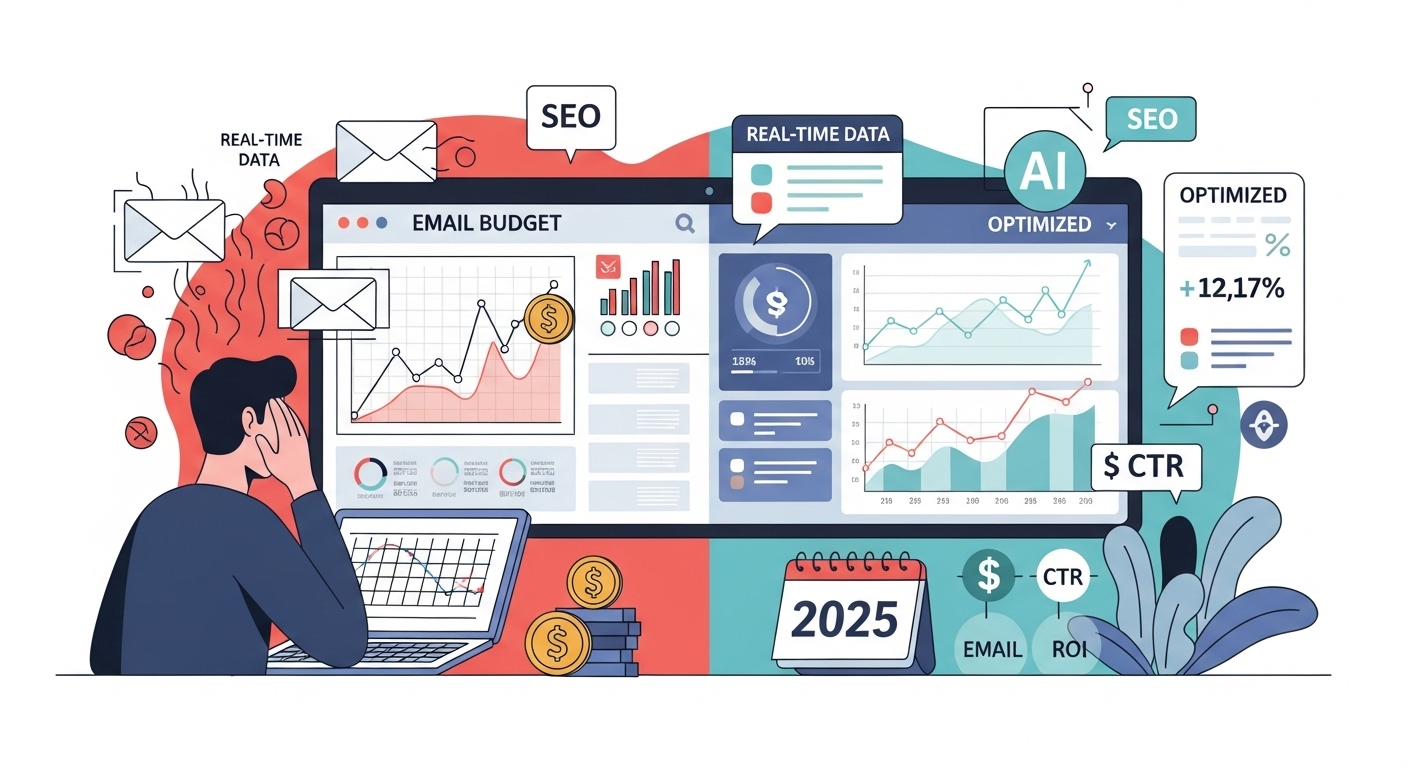
Did you know 65% of email marketing budgets in 2024 were frittered away on campaigns that flopped? That’s a tough pill to swallow. In 2025, SEO’s fast-paced changes demand a data-driven email budget to maximize ROI. With industry averages at 37.72% open rates, 2.00% click rates, and 10.29% bounce rates, there’s room to make every dollar count. Drawing on insights from UseINBOX and industry trends, this post reveals how to overhaul your budget for data-driven email campaigns. Worried your budget’s not pulling its weight? Let’s fix that with actionable steps to boost performance!
1. Prioritize High-ROI Email Channels
Ever poured money into emails that went nowhere? A high-ROI email campaign focuses your budget on strategies with strong SEO impact. Use tools like Google Analytics to track performance—say, which emails drive the most site traffic. Allocate funds to campaigns like welcome emails, which often see open rates above 37.72%. Airbnb nailed this by prioritizing welcome sequences, boosting conversions by 30%. It’s like investing in a surefire stock: focus on what delivers. Here’s a pie chart showing how to split your budget for maximum impact.
2. Real-Time Analytics for Smarter Spending
Why guess when you can know? Real-time analytics align your budget with SEO performance, ensuring every cent works hard. Tools like UseINBOX real-time analytics give live insights into open rates and clicks, letting you shift funds to top-performing campaigns. If a newsletter’s click rate dips below 2.00%, tweak it fast. Automation streamlines this, adjusting campaigns on the fly. This approach can cut wasted spend by 20%. Check this line graph: it shows how real-time tweaks boost email performance.
3. Dodge Budget-Busting Pitfalls
Overspending on duds is a rookie mistake. Common budgeting errors—like dumping cash into low-engagement campaigns—can tank your SEO email budgeting. Use UseINBOX A/B testing to test subject lines or CTAs before going all-in. A budget audit checklist (checklist: analyze open rates, trim inactive subscribers, test campaigns) keeps you on track. Avoiding these pitfalls can lower your bounce rate below 10.29%. Here’s an infographic of the top email budgeting mistakes to steer clear of.
Keyword Research: Find the Sweet Spot
Want to make your emails pop in inboxes? Tools like AnswerThePublic uncover email keyword trends, like “best email campaigns.” Focus on intent-based keywords—say, “top deals this month”—to boost visibility. These align with SEO email strategies for 2025, driving open rates past 37.72%. This table compares keyword tools to optimize your email content.
AI: Your Budgeting Co-Pilot
AI’s a game-changer for budgeting. Tools like MarketMuse spot content gaps, while UseINBOX automation forecasts campaign performance. For example, AI can predict which emails will hit 2.00% click rates, letting you allocate funds wisely. This can boost budget efficiency by 15%. Here’s a graph showing how AI-driven budgeting saves cash.
Mobile and Voice Search: Budget for the Future
With 50% of emails opened on phones, mobile email SEO is non-negotiable. Allocate budget for mobile-optimized templates—fast-loading, clear CTAs—to boost clicks. Optimize subject lines for voice search, like “best email tips 2025,” to align with SEO email trends. This can lift open rates by 10%. Check this chart: mobile email traffic is soaring.
Backlinks: Invest in Connections
Emails can build SEO bridges. Invest in campaigns linking to high-authority pages to drive traffic and earn backlinks. Tools like BuzzSumo spot link opportunities—say, from industry blogs. A newsletter linking to a “Top Trends” page can attract links, boosting rankings. This email backlink strategy can increase traffic by 20%. Here’s a flowchart of the link-building process via email.
Content That Pays Off
Budget for evergreen email content—like how-to guides—to drive traffic to SEO-optimized pages. Newsletters promoting topic clusters (e.g., “Email Marketing 101”) boost rankings and engagement. This can improve ROI by 15%. See this diagram: it shows how email content fuels SEO.
UX and Site Performance: Don’t Skimp
Your emails drive traffic, but your site closes the deal. Allocate funds for landing page speed and UX, focusing on Core Web Vitals. Use UseINBOX real-time analytics to monitor email-driven traffic for UX tweaks. Better site performance can lift conversions by 10%, ensuring emails don’t just get opened but drive action. This bar chart shows UX’s impact on email performance.
Conclusion: A data-driven email SEO budget can transform your campaigns in 2025, maximizing ROI against benchmarks of 37.72% open rates, 2.00% click rates, and 10.29% bounce rates. From prioritizing high-ROI channels to dodging budget pitfalls, these strategies ensure your dollars work smarter. Audit your budget this week with UseINBOX and share your insights in the comments! Stop wasting cash and start driving results.